
Working With a Residential Electrician in Kenner, LA
Most household electrical jobs are not emergencies. They are the steady list of small frustrations and planned improvements that come with owning a home: the kitchen outlet that keeps tripping, the bedroom with one receptacle, the ceiling fan you have been meaning to add. This page covers the residential work Kenner families ask about most.
1Kitchens: where demand is highest
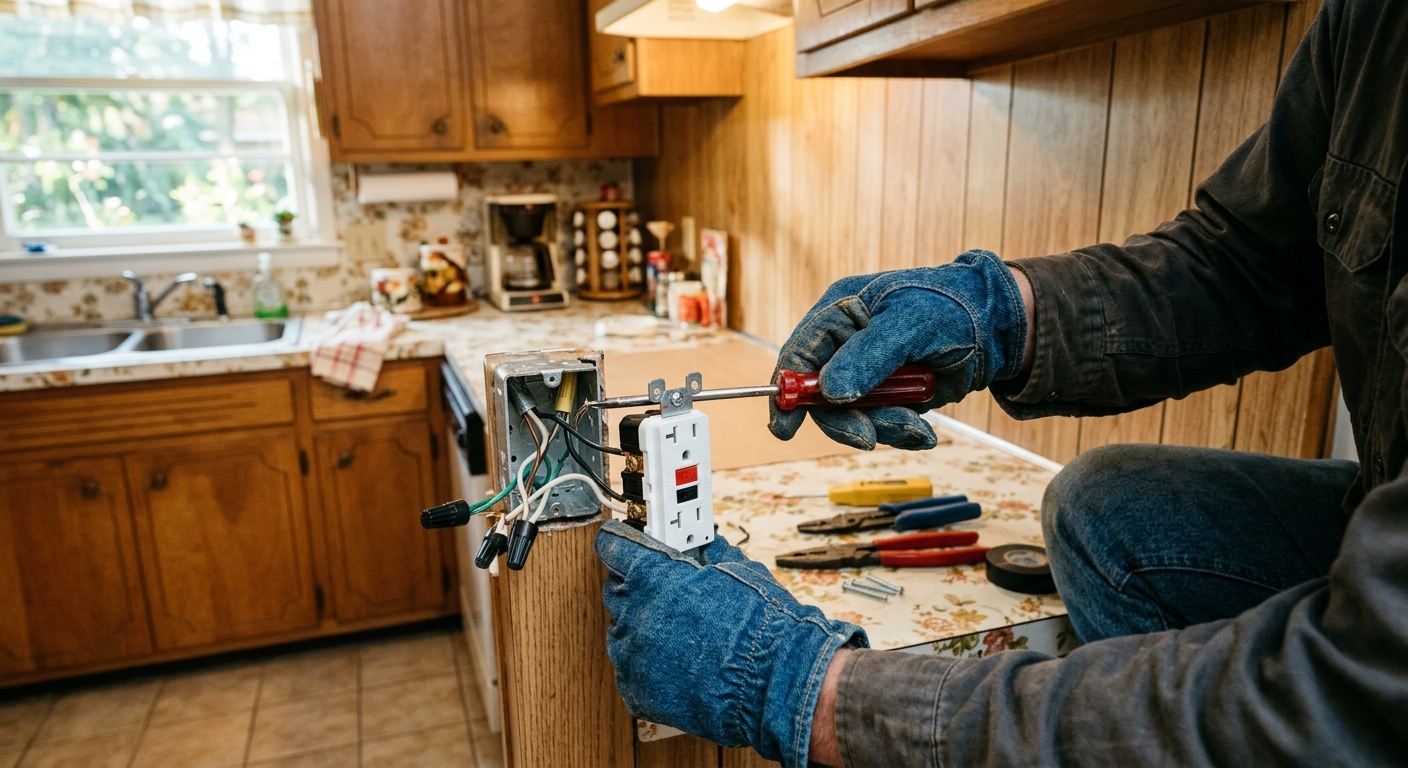
Kitchens in 1960s and 1970s Kenner homes were designed around a range, a refrigerator and a toaster. Today the same counter may hold an air fryer, a coffee maker, an electric kettle and a stand mixer. Modern code calls for at least two 20 amp small-appliance circuits on the counters, GFCI protection on every counter receptacle, and dedicated circuits for the dishwasher, disposal and microwave. When a kitchen is being renovated, that is the ideal time to bring the circuits up to date.
2Bathrooms, laundry and garages
These are the wet or damp rooms, and they are where GFCI protection does its most important work. A bathroom should have its own 20 amp circuit for receptacles. Laundry areas need a dedicated circuit for the washer and a properly sized 30 amp circuit for an electric dryer. Garages in Kenner often double as workshops and freezer rooms, which calls for more capacity than the single receptacle many were built with.
3Two-prong outlets and grounding
Many older houses north of Airline Drive still have ungrounded two-prong receptacles in bedrooms and living rooms. Swapping them for three-prong outlets without a ground wire is a common shortcut, and it creates a false sense of safety. The proper options are to run a new grounded circuit, or to install GFCI protection at the first outlet on the run and label downstream receptacles as having no equipment ground. A residential electrician can test each circuit and recommend the approach that fits your walls and budget.
4Lighting and ceiling fans
Ceiling fans are almost a necessity in south Louisiana, and a fan hung from a standard light box will wobble and eventually loosen. A fan-rated box, braced to the ceiling joists, is the only safe support. Recessed LED lighting has also become popular in older ranch homes with low ceilings, because it brightens a room without hanging fixtures. In attics, insulation-contact rated housings are essential where blown-in insulation covers the ceiling.
5Adding capacity for modern life
- Level 2 EV charging on a dedicated 40 or 50 amp circuit
- Heat pump water heaters replacing gas units
- Mini-split systems for converted garages and additions
- Home offices with dedicated computer circuits
- Outdoor kitchens and patio lighting
Before any of these, a load calculation shows whether the existing service can handle the addition.
6Smoke and carbon monoxide alarms
Hardwired, interconnected smoke alarms are required in new construction and major renovations, and they are a smart upgrade in any older home. When one alarm sounds, they all sound, which matters in a sprawling single-storey layout where a bedroom at the far end may not hear a kitchen alarm. Any house with a gas appliance, attached garage or standby generator should also have carbon monoxide detection. A residential electrician can run the interconnect wiring through the attic with minimal disruption.
For homeowners comparing contractors, this Kenner residential electrician describes the kinds of household projects it takes on across Jefferson Parish.
7Planning around renovation
If you are opening walls for a remodel, bring an electrician in early. Running new wire through open studs costs a fraction of fishing it through finished drywall later. Walk each room and think about where furniture, televisions and desks will sit, then place receptacles and data lines accordingly. It is far easier to add an outlet on paper than after the paint is dry.
8Small jobs are welcome too
Many homeowners hesitate to call about a single dead outlet or a flickering fixture, assuming it is too small to bother with. In reality, small symptoms are often the early warning of a loose connection upstream. Fixing one while it is still a minor annoyance is how bigger, costlier problems are avoided. A good residential electrician treats every call as a chance to spot what else the house might need.
9A seasonal checklist for Kenner homeowners
Residential electrical care fits naturally around the calendar. In early spring, before the air conditioning starts working hard, test every GFCI receptacle with its built-in button and replace any that fail to trip or reset. Check the condenser disconnect outside for rust and make sure its cover closes firmly. In late spring, before hurricane season, press the test button on your smoke alarms, replace backup batteries, and confirm that the generator inlet and interlock are ready.
In summer, watch for lights dimming when the compressor starts, which can signal a weak connection or an undersized circuit. In the cooler months, when holiday lighting and space heaters appear, avoid chaining power strips and keep heaters on their own receptacle. Once a year, take the dead front off the panel only if a professional is present, or simply look at the outside of the panel for rust, heat discolouration or a humming sound. Small, regular habits like these keep a home's wiring healthy far longer than any single repair, and they give you a clear list of observations to share when a residential electrician visits.