What to Do While You Wait for an Emergency Electrician in Kenner
Electrical emergencies rarely arrive at a convenient hour. A storm rolls through at night, a breaker refuses to reset on a Sunday, or a burning smell drifts from a wall socket during dinner. Knowing what counts as urgent, and what to do in the first few minutes, keeps people safe until help arrives.
1True emergencies
- Smoke, sparks or a burning smell from any outlet, switch or panel
- A service drop or power line down on the property
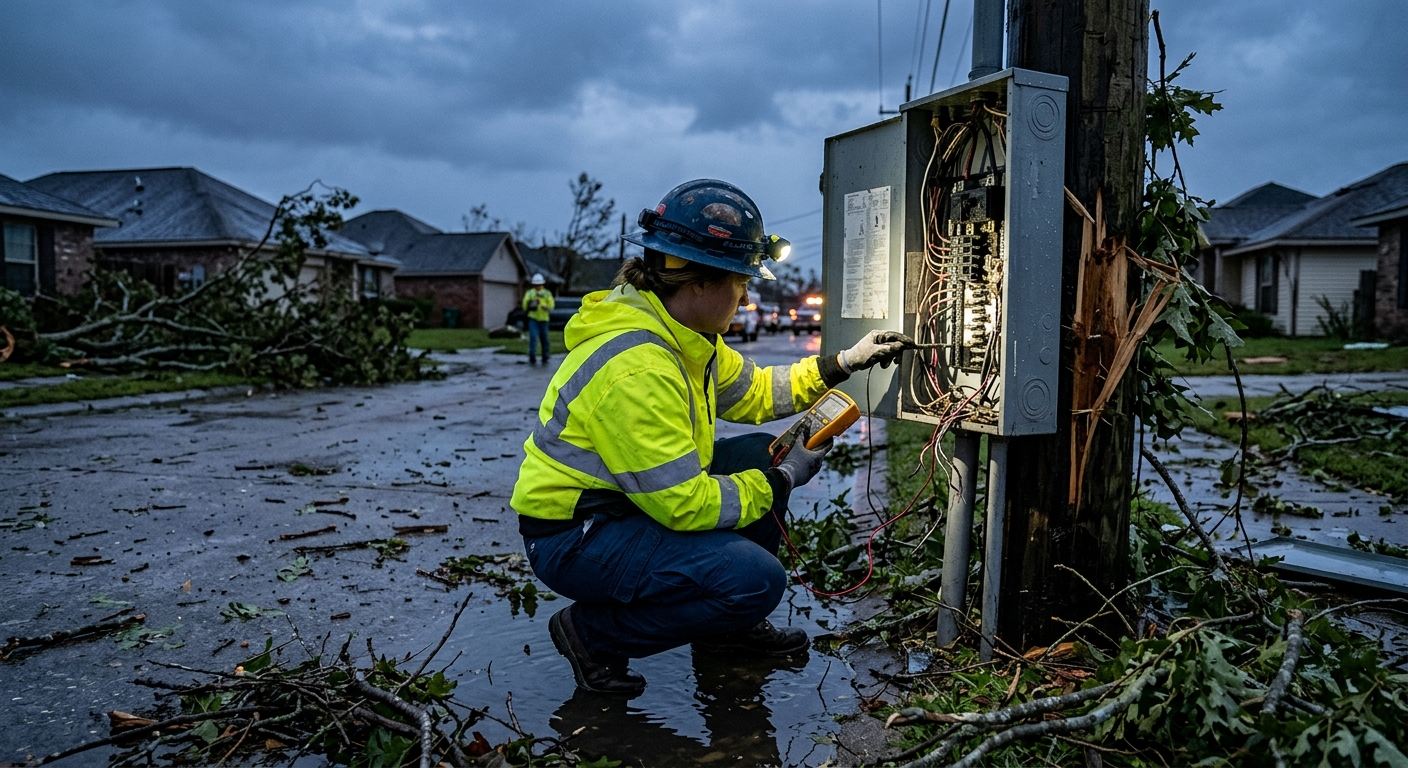
- Water reaching the panel, receptacles or wiring
- A breaker that trips instantly every time it is reset
- Tingling or shocks from fixtures, appliances or plumbing
- Partial power, with half the house dark and lights oddly bright elsewhere
2The first five minutes
If you smell burning or see smoke, get everyone out and call 911 first. If it is safe to reach the panel with dry hands and dry footing, switch off the main breaker. Never touch a panel that is wet or sitting in water. Keep people and pets well away from any fallen line, and assume every wire on the ground is live. Report downed utility lines to Entergy as well as to your electrician.
3After a hurricane or tropical storm
Kenner's biggest cluster of emergency calls follows named storms. Wind can rip the service mast off the roof, pulling the meter base away from the wall. Flooded garages and slab homes may have water in low receptacles, the water heater circuit, or the panel itself. Anything that has been submerged needs to be inspected and in most cases replaced before it is re-energised; breakers and receptacles that have been underwater can fail unpredictably even after they dry out.
If the mast or meter base is damaged, the utility will not reconnect power until a licensed electrician has repaired it and, in many cases, the city has signed off. That is why local electricians get so busy after a storm, and why it helps to know who you will call before the season starts.
4Partial power and lost neutrals
One of the most misunderstood emergencies is a lost or loose neutral. The symptoms are strange: some lights go very bright while others dim, appliances behave erratically, and electronics may fail outright. It happens when the shared neutral conductor in the service drop or panel breaks or corrodes. Turn off sensitive equipment, switch off the main if you can, and treat it as urgent, because voltage swings can damage everything plugged in.
5Generator mistakes to avoid
During long outages, the temptation to improvise is strong. Never backfeed a house through a dryer or range receptacle. Never run a generator in a garage, even with the door open. Keep it at least twenty feet from windows and doors and use heavy-gauge cords rated for the load. If you already own a generator, having an interlock or transfer switch installed before the season is the single best way to avoid a dangerous night.
6What an emergency visit looks like
An emergency electrician's first goal is to make the situation safe, not necessarily to complete a full repair on the spot. That may mean isolating a damaged circuit so the rest of the house can stay powered, temporarily securing a service entrance, or shutting everything down until parts are available. Once the hazard is controlled, the permanent repair can be scoped and permitted properly. Expect clear communication about what was done, what remains, and what it will cost.
Homeowners who want to know how a local shop handles urgent calls can read about emergency electrician service in Kenner from MK Electric Man.
7Preventing the next emergency
Many after-hours calls trace back to problems that were visible months earlier: a warm outlet, a buzzing breaker, a meter base streaked with rust. A periodic inspection, a whole-home surge device and a properly installed generator connection remove most of the common causes before they escalate.
8Keep this list handy
- Know where your main breaker is and label the panel
- Keep a flashlight and spare batteries near the panel
- Save your electrician's number in every phone in the house
- Photograph the panel and meter for insurance before storm season
9Insurance, documentation and the days after
Once the immediate danger has passed, the paperwork begins. Photograph damaged equipment before anything is removed, including the meter base, the panel interior once an electrician has made it safe, and any scorched receptacles or appliances. Keep every invoice, and ask your electrician for a written description of the cause and the repair, since adjusters look for exactly that. If the work required a permit, keep the inspection record with your homeowner documents.
Storm-related claims often involve both a homeowner policy and a separate flood policy, and they treat electrical damage differently depending on whether wind or rising water caused it. A clear report from the electrician about where water reached and which components failed helps sort that out. Finally, use the repair as a chance to upgrade: if the panel had to be replaced anyway, adding surge protection and a proper generator connection now means the next storm is far less likely to become another emergency call in the middle of the night.